
One of the most powerful tools available to dealerships and garages is flexible finance. It helps your customers say yes to car repairs and stop delaying their MOTs, and it boosts customer retention, too.
Often, though, the complexity or cost of offering it gets in the way.
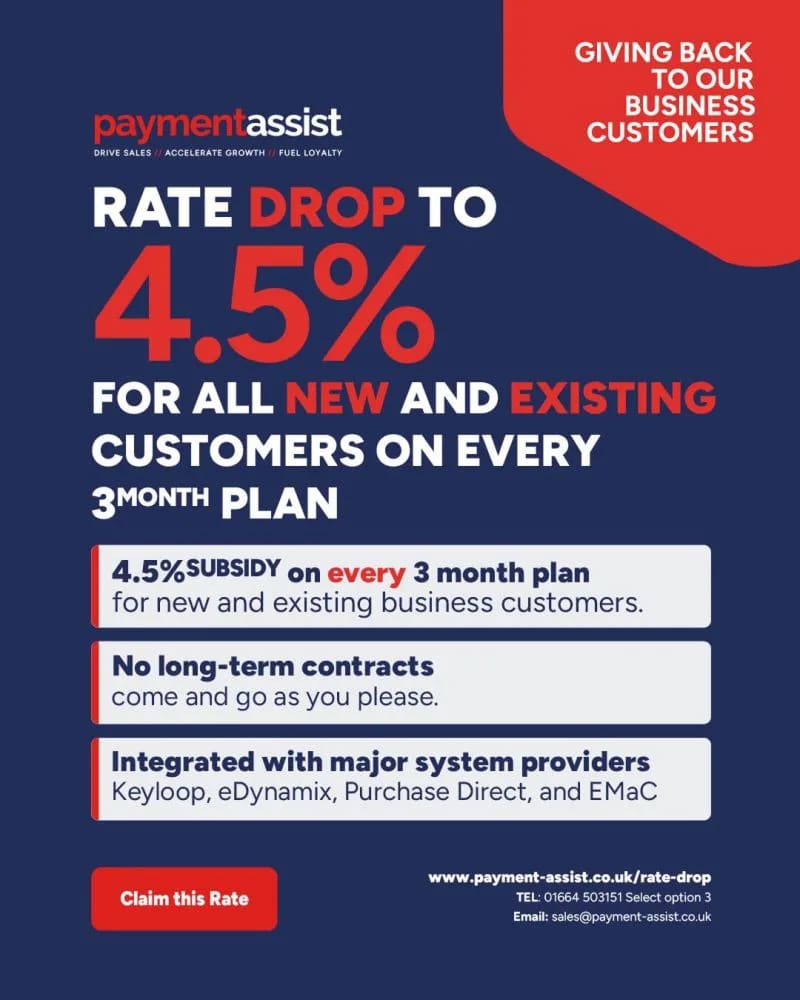
That’s why we’ve taken decisive action. At Payment Assist, we’ve reduced our rates to 4.5% across all 3-month plans, making it easier than ever for businesses like yours to offer fair, accessible finance to your customers.
Flexible Car Repair Finance Matters More Than Ever
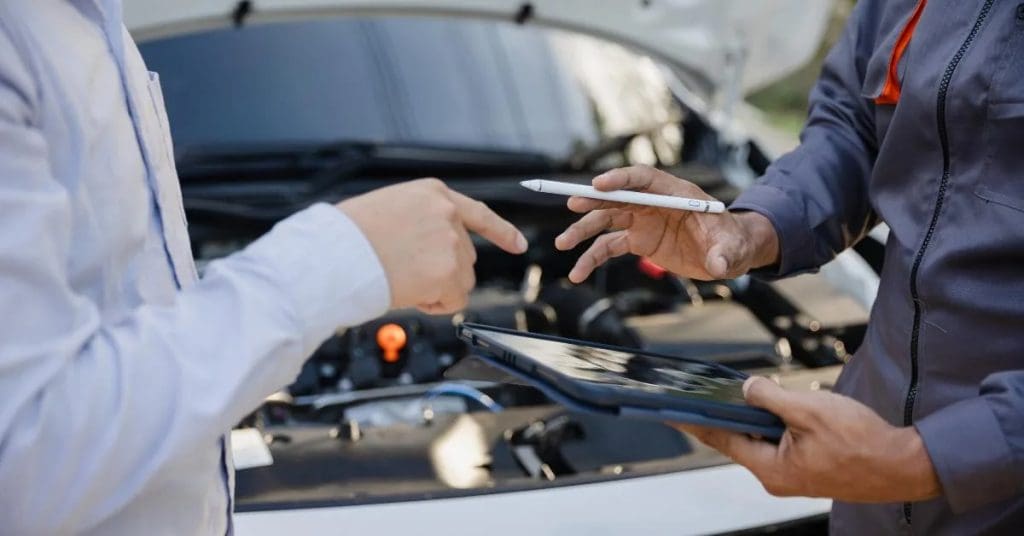
Today’s customers are financially savvy and increasingly selective about where they spend their money. When an unexpected repair bill lands, customers want options. Offering a flexible payment plan isn’t just a nice-to-have; it’s often the difference between winning a job and losing it to a competitor down the road.
The problem is that many finance solutions on the market are either too expensive for businesses to offer, too complicated to set up, or too restrictive to be genuinely useful. Traditional lending models weren’t built with the realities of the automotive aftersales market in mind. But that is exactly what Payment Assist was designed to do.
What’s Changed at Payment Assist and Why it Matters to You
By reducing our rates across all 3-month plans, we’re putting more power in the hands of garages, dealerships, workshops and tyre fitters across the UK.
Lower rates mean a more competitive proposition for your customers, which translates directly into higher conversion rates and stronger long-term loyalty.
“Our model is simple — an effective, proven, single-source solution for aftercare, repair and value-added finance needs. By reducing our rates across all 3-month plans, we aim to help companies offer fair and accessible finance options, improve their conversion rates and support future growth.” – Chief Commercial Officer, Chris Masters.
Crucially, there are no long-term contracts. You won’t be tied into complicated commitments or lengthy agreements. You get all the benefits of a market-leading finance solution, with none of the baggage.
Ready to Offer Flexible Car Repair Finance with no Long-Term Contracts?
With reduced rates across all 3-month plans, no long-term contracts and seamless integration with the systems you already use, there’s never been a better time to boost your conversion rates and support your business growth with Payment Assist. Claim your reduced rate today, or contact our team to find out more.
Payment Assist Has a Track Record You Can Trust
We’re not newcomers to this space. As the UK’s leading provider of flexible finance solutions for the automotive sector, Payment Assist has already served more than one million customers and processed over £900 million in transactions.
That scale speaks to the trust that garages, workshops, tyre fitters and the franchise dealer community have placed in us and to the real-world results our solutions deliver.
We’re also proud to be owned by Manx Financial Group PLC, an AIM listed business that owns banking subsidiary Conister Bank Limited, and we are regulated by the Financial Conduct Authority.
That regulatory oversight means you can offer our solutions to your customers with complete confidence, knowing they’re backed by a robust, compliant and trustworthy financial institution.
Part of a Complete Suite of Solutions
Rate reductions on 3-month plans are just one part of the picture.
At Payment Assist, we also offer a comprehensive suite of payment solutions designed to meet the full range of needs in the automotive aftersales market. These include interest-free buy now, pay later (BNPL) options, regulated lending, business lending and card processing, all from a single provider.
Having everything under one roof greatly simplifies your operations and means you always know where to turn, whatever your customers need.
Car Repair Finance that Fits Into Your Existing Processes
We know that switching or adding a new system can feel daunting. That’s why we’ve invested heavily in integrations with the platforms you already use.
Payment Assist connects with a number of market-leading systems, including Keyloop, eDynamix, Purchase Direct, EMaC, RTC, Diamondbrite, Snap-on autoVHC, BookMyGarage, Garage Hive and TechMan, among others.
We want to make offering flexible finance easier than ever for garages, workshops and tyre fitters. That’s why we integrate with multiple market-leading systems. For you, the end result is a solution that feels like a natural extension of the way you already work, rather than an additional layer of complexity.
Want to Make the Most of Payment Assist’s Rate Cuts?
If you’re not yet offering flexible finance, or if your current solution is costing you more than it should, now is the perfect time to make a change. Click here to claim your reduced rate of 4.5% for all 3-month plans.
With reduced rates across all 3-month plans, no long-term contracts, seamless integrations and the backing of over one million satisfied customers, Payment Assist is the clear choice for automotive businesses that want to grow with confidence.
To find out more about how Payment Assist can help your business, click here. If you have any questions, then reach out to our team today for advice.
Payment Assist is a credit provider. Credit is subject to status and affordability checks. Late or missed payments may affect your credit rating and fees may apply.
FAQs
What changes has Payment Assist made to its pricing?
Payment Assist has reduced its rates across all 3-month plans. This applies to garages, workshops and tyre fitters, making it more affordable than ever to offer flexible finance to customers.
Are there any long-term contracts involved?
No. Payment Assist operates with no long-term contracts, meaning businesses are not tied into complicated commitments or lengthy agreements. You can offer flexible finance on your own terms.
What types of finance does Payment Assist offer?
Payment Assist provides a comprehensive suite of payment solutions, including interest-free Buy Now, Pay Later (BNPL), regulated lending in the aftersales market, business lending and card processing, all from a single provider.
Does Payment Assist integrate with my existing systems?
Yes. Payment Assist integrates with a wide range of market-leading platforms, including Keyloop, eDynamix, Purchase Direct, EMaC, RTC, Diamondbrite, Snap-on autoVHC, BookMyGarage, Garage Hive and TechMan, among others.
Further Reading
What Do Increased Car Write-Offs Mean for Dealerships?
Workshop Quality Control: Why Comebacks Are Costing You?
Car Parts Shortage: Managing Repair Delays and Keeping Customers Onside
How Payment Assist’s Car Repair Payment Plan Helped J Petty Motors
An unexpected repair bill is one of those moments that can knock the wind right out of you. Spreading the cost through a finance plan is an incredibly sensible solution. But with more BNPL and car repair finance options appearing all the time, it’s worth knowing exactly what to look for in a responsible car finance provider before you commit to anything.
Why It Matters to Choose Car Repair Finance Safely
Not all finance providers operate the same way. Some are transparent about costs from the start; others bury fees in the small print or use confusing language to obscure what you’re actually agreeing to.
Getting car repair finance through the wrong provider can leave you paying more than you expected. The good news is that choosing car repair finance safely isn’t complicated. You just need to know what to look for.
Looking for a Transparent Car Repair Finance Provider?
At Payment Assist, we pride ourselves on being honest, transparent car repair finance providers. Our solution is available at thousands of garages, tyre centres, and workshops across the UK. If you need help spreading the cost of a repair, find a Payment Assist partner near you or get in touch to learn more.

What to Look for in a Responsible Car Finance Provider
1. Complete Transparency on Costs
Before you agree to anything, a responsible provider should be able to tell you clearly:
- The total amount you’ll repay
- Whether there’s any interest or fees
- Exactly what you’ll pay and when
If the answer to “what will this actually cost me?” isn’t a straight one, that’s a big red flag. The signs of a transparent BNPL provider in the UK are: no surprises, no buried charges, and plain English throughout.
2. FCA Regulation
Any legitimate UK finance provider offering consumer credit must be authorised and regulated by the Financial Conduct Authority (FCA). This matters because FCA regulation means the provider is held to strict standards around affordability, fair treatment of customers, and responsible lending.
You can check whether a provider is registered on the FCA’s Financial Services Register at fca.org.uk.
3. A Fair and Proportionate Approach to Credit Checks
One of the questions to ask before using car repair finance is how the provider handles credit checks. Some run a hard credit search for every application, which leaves a mark on your credit file regardless of whether you’re approved.
Responsible providers approach this proportionately.
For smaller amounts, for instance, a basic debit card verification may be all that’s needed, with a full credit check reserved for larger amounts.
4. Clarity on What Happens if You Miss a Payment
Life doesn’t always go to plan. A responsible finance provider will be upfront about what happens if a payment is late or missed, and their approach to that situation should feel fair and reasonable.
Before you sign up, ask: what’s the missed payment process? Is there a fee? Who will contact you and how?
The answer that you get tells you a lot about the kind of company you’re dealing with.
5. No Pressure to Accept Larger Plans Than You Need
A provider acting in your interest will help you find the right plan for your situation. They won’t push you towards the largest possible amount. If you feel like the application process is being steered towards options that suit the provider more than you, that’s a sign to step back.
Questions to Ask Before Using Car Repair Finance
Knowing the right questions to ask before using car repair finance can make a real difference. Here’s a quick checklist:
- Is the provider FCA-regulated? If you can’t confirm this, don’t proceed.
- Is the plan genuinely interest-free and fee-free? Ask for the total repayable amount in writing.
- Will this affect my credit score? Find out whether a hard search is involved and when.
- What are my rights if I want to repay early? Responsible providers won’t penalise you for this.
- How will I be contacted if there’s a problem? Look for proportionate, clear communication policies.
Don’t be worried that these are awkward questions. Any provider worth using will answer them without hesitation.
Red Flags to Watch Out For
If something feels off during the application process, trust your instincts. Some specific things to watch for:
- Fees described as “administration charges” or “processing costs” that weren’t mentioned upfront
- Pressure to decide immediately or risk losing the offer
- Vague or evasive answers to direct questions about costs
- No mention of FCA regulation anywhere on the website or documentation
- Communication that feels aggressive or confusing rather than helpful
The signs of a transparent BNPL provider in the UK are generally the opposite of the above: straightforward language, clear figures, and an application process that doesn’t feel rushed.
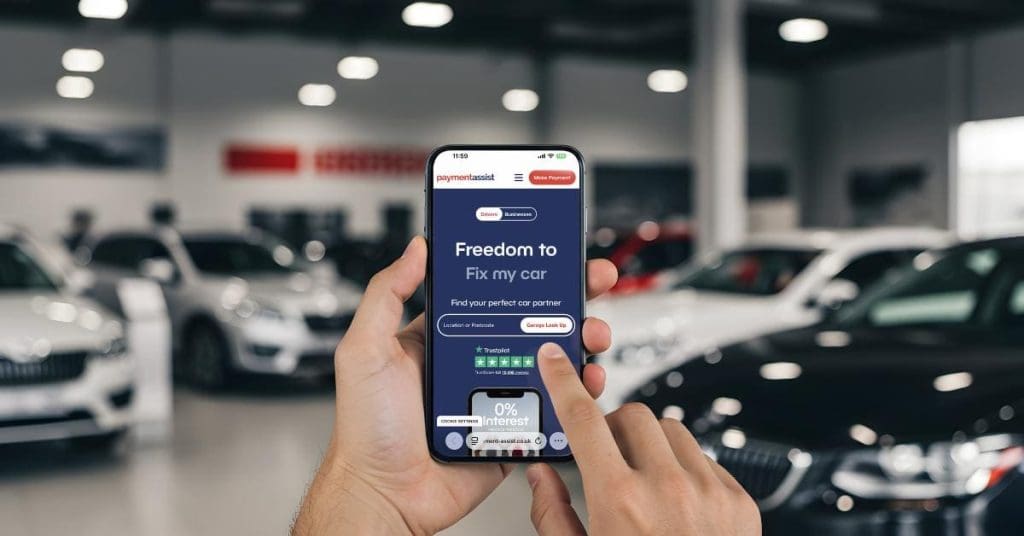
Want to Spread the Cost of Your Next Car Repair?
Payment Assist is trusted by over 1.4 million customers and available at 8,000+ partner businesses across the country. Founded in 2013 and FCA-regulated, we offer interest-free, fee-free payment plans spread over 3 to 9 months, with no hard credit check on amounts under £1,000.
The application takes seconds, and the process couldn’t be simpler: the first payment is made at the garage, and the rest is handled by direct debit. It’s car repair finance designed to be genuinely helpful, not stressful.
Find a Payment Assist partner near you or get in touch today.
Payment Assist is a credit provider. Credit is subject to status and affordability checks. Late or missed payments may affect your credit rating and fees may apply.
FAQs
Is car repair finance safe to use?
Yes, as long as you use an FCA-regulated provider that’s transparent about costs from the start. Always check the total repayable amount, understand the missed payment policy, and confirm there are no hidden fees before agreeing to any plan.
Does applying for car repair finance affect my credit score?
It depends on the provider. Some run a hard credit search, which does leave a mark on your file. Payment Assist, for example, only requires a debit card verification for amounts under £1,000, so your credit score is unaffected for smaller plans.
How do I find a garage that accepts Payment Assist?
Payment Assist works with over 8,000 partner businesses across the UK, including independent garages, tyre centres, and dealerships. You can search for a merchant near you on the Payment Assist website.
Further Reading
Why Are Young Driver Repairs Being Delayed?
The Real Cost of Ignoring Car Warning Signs
The Danger of DIY Car Repairs: Why They Cost More in the Long Run
How BNPL Car Repair Helps Families, Carers, and Key Workers
One of the most powerful tools available to dealerships and garages is flexible finance. It helps your customers say yes to car repairs and stop delaying their MOTs, and it boosts customer retention, too.
Often, though, the complexity or cost of offering it gets in the way.
That’s why we’ve taken decisive action. At Payment Assist, we’ve reduced our rates to 4.5% across all 3-month plans, making it easier than ever for businesses like yours to offer fair, accessible finance to your customers.

Flexible Car Repair Finance Matters More Than Ever
Today’s customers are financially savvy and increasingly selective about where they spend their money. When an unexpected repair bill lands, customers want options. Offering a flexible payment plan isn’t just a nice-to-have; it’s often the difference between winning a job and losing it to a competitor down the road.
The problem is that many finance solutions on the market are either too expensive for businesses to offer, too complicated to set up, or too restrictive to be genuinely useful. Traditional lending models weren’t built with the realities of the automotive aftersales market in mind. But that is exactly what Payment Assist was designed to do.

What’s Changed at Payment Assist and Why it Matters to You
By reducing our rates across all 3-month plans, we’re putting more power in the hands of garages, dealerships, workshops and tyre fitters across the UK.
Lower rates mean a more competitive proposition for your customers, which translates directly into higher conversion rates and stronger long-term loyalty.
“Our model is simple — an effective, proven, single-source solution for aftercare, repair and value-added finance needs. By reducing our rates across all 3-month plans, we aim to help companies offer fair and accessible finance options, improve their conversion rates and support future growth.” – Chief Commercial Officer, Chris Masters.
Crucially, there are no long-term contracts. You won’t be tied into complicated commitments or lengthy agreements. You get all the benefits of a market-leading finance solution, with none of the baggage.
Ready to Offer Flexible Car Repair Finance with no Long-Term Contracts?
With reduced rates across all 3-month plans, no long-term contracts and seamless integration with the systems you already use, there’s never been a better time to boost your conversion rates and support your business growth with Payment Assist. Claim your reduced rate today, or contact our team to find out more.

Payment Assist Has a Track Record You Can Trust
We’re not newcomers to this space. As the UK’s leading provider of flexible finance solutions for the automotive sector, Payment Assist has already served more than one million customers and processed over £900 million in transactions.
That scale speaks to the trust that garages, workshops, tyre fitters and the franchise dealer community have placed in us and to the real-world results our solutions deliver.
We’re also proud to be owned by Manx Financial Group PLC, an AIM listed business that owns banking subsidiary Conister Bank Limited, and we are regulated by the Financial Conduct Authority.
That regulatory oversight means you can offer our solutions to your customers with complete confidence, knowing they’re backed by a robust, compliant and trustworthy financial institution.
Part of a Complete Suite of Solutions
Rate reductions on 3-month plans are just one part of the picture.
At Payment Assist, we also offer a comprehensive suite of payment solutions designed to meet the full range of needs in the automotive aftersales market. These include interest-free buy now, pay later (BNPL) options, regulated lending, business lending and card processing, all from a single provider.
Having everything under one roof greatly simplifies your operations and means you always know where to turn, whatever your customers need.
Car Repair Finance that Fits Into Your Existing Processes
We know that switching or adding a new system can feel daunting. That’s why we’ve invested heavily in integrations with the platforms you already use.
Payment Assist connects with a number of market-leading systems, including Keyloop, eDynamix, Purchase Direct, EMaC, RTC, Diamondbrite, Snap-on autoVHC, BookMyGarage, Garage Hive and TechMan, among others.
We want to make offering flexible finance easier than ever for garages, workshops and tyre fitters. That’s why we integrate with multiple market-leading systems. For you, the end result is a solution that feels like a natural extension of the way you already work, rather than an additional layer of complexity.
Want to Make the Most of Payment Assist’s Rate Cuts?
If you’re not yet offering flexible finance, or if your current solution is costing you more than it should, now is the perfect time to make a change. Click here to claim your reduced rate of 4.5% for all 3-month plans.
With reduced rates across all 3-month plans, no long-term contracts, seamless integrations and the backing of over one million satisfied customers, Payment Assist is the clear choice for automotive businesses that want to grow with confidence.
To find out more about how Payment Assist can help your business, click here. If you have any questions, then reach out to our team today for advice.
Payment Assist is a credit provider. Credit is subject to status and affordability checks. Late or missed payments may affect your credit rating and fees may apply.
FAQs
What changes has Payment Assist made to its pricing?
Payment Assist has reduced its rates across all 3-month plans. This applies to garages, workshops and tyre fitters, making it more affordable than ever to offer flexible finance to customers.
Are there any long-term contracts involved?
No. Payment Assist operates with no long-term contracts, meaning businesses are not tied into complicated commitments or lengthy agreements. You can offer flexible finance on your own terms.
What types of finance does Payment Assist offer?
Payment Assist provides a comprehensive suite of payment solutions, including interest-free Buy Now, Pay Later (BNPL), regulated lending in the aftersales market, business lending and card processing, all from a single provider.
Does Payment Assist integrate with my existing systems?
Yes. Payment Assist integrates with a wide range of market-leading platforms, including Keyloop, eDynamix, Purchase Direct, EMaC, RTC, Diamondbrite, Snap-on autoVHC, BookMyGarage, Garage Hive and TechMan, among others.

Further Reading
- What Do Increased Car Write-Offs Mean for Dealerships?
- Why Are Garage Labour Costs Increasing & What Can Businesses Do?
- Managing Car Repair Costs for Your Customers
- Why Drivers Delay MOT Fixes and How 0% Car Repair Finance Can Help
Recently, the RAC Report on Motoring found that two thirds of UK drivers were hit with unexpected car repair costs last year, with the average bill rising to £650. More than half said they would struggle to pay a surprise bill of between £501 and £1,000. So the question of how to manage unexpected car repair costs is extremely cogent at the moment.
All of this is part of a wider financial picture that many households are struggling with at the moment. According to the House of Commons Library, one in three adults in Great Britain cannot afford an unexpected but necessary expense of £850.
When your car is also essential for getting to work, taking the kids to school, or reaching healthcare appointments, delaying a repair is not optional, even when the money simply isn’t there.
It’s in circumstances like these that spreading the cost of car repairs is becoming an increasingly important part of how people manage their day-to-day finances.
Why Do Unexpected Car Repairs Hit So Hard?
In short, it’s because cars don’t break down on a schedule. There’s never a convenient moment for a gearbox fault or a blown tyre, and the bills that follow don’t care whether you’ve got room in this month’s budget. That unpredictability is what makes budgeting for car maintenance during cost-of-living challenges even harder.
The most common unexpected vehicle costs are tyre repairs or replacements (54% of drivers), brake repairs (26%), suspension issues (18%), and battery problems (17%). These are often safety-critical and need urgent attention.
With the cumulative effect of several years of above-average inflation still being felt across the UK, the gap between what people can afford and what they need to spend on their car has widened. A lot of drivers are genuinely caught between a bill they can’t pay upfront and a repair they can’t put off.
The problem with putting it off
Delaying necessary repairs almost always costs more in the long run. The financial logic of waiting until you can afford it is understandable, but it often works against you. Spreading the cost of car repairs as they arise is frequently the more sensible approach, both for your wallet and your safety.

Looking to Spread the Cost of Car Repairs?
Payment Assist can help. Applying takes seconds, and there’s no hard credit check for repairs under £1,000. Find a Payment Assist partner garage near you and see how easy it is to spread the cost. Get in touch today to find out more.
How to Manage Unexpected Car Repair Costs in the UK
If you’re faced with a car repair bill you can’t pay all at once, there are a few practical options worth knowing about. That said, some are better than others.
Credit cards and overdrafts
These are the most common fallback, but they come with a cost. Standard credit card interest rates have risen alongside the Bank of England base rate over the past few years, and using an unarranged overdraft can be extremely expensive. If you can pay off the balance before interest kicks in, a credit card can work well, but for many people, that’s not realistic with a bill in the hundreds of pounds.
Personal loans
A personal loan can spread the cost of car repairs, but applications involve a credit check, and the interest rates for smaller amounts can make the overall cost of borrowing quite high. The application process also takes time, which isn’t great when your car is sitting in the garage and you need it back on the road.
Interest-free repair finance
This is where finance solutions designed specifically for car repairs stand apart. With Payment Assist, drivers can split the cost of repairs at their garage across 3, 4, 6, or up to 9 monthly instalments completely interest-free and fee-free. For bills under £1,000, there’s not even a credit check; approval is based on a simple debit card verification and takes seconds.
The first instalment is paid at the garage. The remaining payments are collected automatically by direct debit. You drive away with your car fixed, and the cost is managed in smaller amounts that fit around your existing budget; it’s that simple.
What to Do When You Can’t Afford a Car Repair Right Now
If you’re facing a repair bill you can’t cover immediately, then here’s a handy checklist:
- Get a clear quote from the garage; understanding exactly what needs doing and why is the starting point.
- Check whether the garage offers Payment Assist. Over 8,000 UK garages are in our network, and applying is free and instant.
- Choose your repayment plan. Select from 3, 4, 6, or up to 9 months, depending on what fits your budget.
- Pay the first instalment and drive away. Subsequent payments are handled automatically by direct debit.
- Manage your account online through our self-serve platform, available 24/7.
There’s no paperwork, no lengthy application, and for most repairs, no credit check. The whole process removes friction at exactly the moment when the last thing you need is more of it.

Keeping UK Drivers Moving, Whatever the Budget
We built Payment Assist around a simple idea: the cost of a repair shouldn’t determine whether a driver can stay safe on the road.
With over £900 million funded and 1.4 million customers served, we’re proud to offer a solution that works for everyday households managing everyday financial pressures.
If you’ve got a repair coming up and want to spread the cost, find a Payment Assist partner garage or sign up to use Payment Assist today. Interest-free, fee-free, and built around your budget. Get in touch to find out more.
Payment Assist is a credit provider. Credit is subject to status and affordability checks. Late or missed payments may affect your credit rating and fees may apply.
Payment Assist is a credit provider. Credit is subject to status and affordability checks. Late or missed payments may affect your credit rating, and fees may apply.
FAQs
How can I manage unexpected car repair costs in the UK?
The most practical options for managing unexpected car repair costs in the UK are interest-free repair finance options such as Payment Assist. It is often the lowest-cost option: there are no fees and no interest.
Can I spread the cost of a car repair?
Yes. Spreading the cost of car repairs is straightforward through interest-free finance providers like Payment Assist. Payment Assist lets drivers split repair bills over 3, 4, 6, or up to 9 months with no interest and no fees. For bills under £1,000, no credit check is required; just a debit card verification at the point of repair.
What should I do if I can’t afford a car repair right now?
If you can’t afford a car repair immediately, the first step is to get a written quote from the garage. Then check whether they offer interest-free finance such as Payment Assist. If they do, you can apply on the spot, choose a repayment plan that fits your budget, and have the work done without paying the full amount upfront.

Further Reading
- The Danger of DIY Car Repairs: Why They Cost More in the Long Run
- The Real Cost of Ignoring Car Warning Signs
- How BNPL Helps Families, Carers, and Key Workers
- Why Responsible Buy Now, Pay Later Works for Car Repairs
It’s really easy to feel that there’s something appealing about DIY car repairs. A quick search, a YouTube tutorial, and a trip to the parts shop, and it’s job done, right?
For minor things like topping up fluids or changing a wiper blade, that’s probably fine. But for anything more involved, the danger of DIY car repairs is that they’re usually a lot messier and a lot more expensive than they first seem, especially when you take flexible car repair payment options into account.
So why is it that reaching for the spanner yourself can end up costing you far more than handing the keys to a professional?
DIY Car Repairs Have Big Hidden Costs
One in four drivers say they’ve attempted repairs themselves rather than paying a qualified mechanic.
When you compare the price of a part to professional car repair costs, you might assume you’re saving money. But that calculation leaves out a lot.
When you DIY, you’re also paying for tools you might only use once, diagnostic equipment you probably don’t have, and parts you buy based on a wrong diagnosis.
You’re also paying with your time, and if something goes wrong, you’re paying for the professional to come in and fix whatever it is that you broke as well as the original fault.
The dangers of DIY car repair aren’t just financial, either. A poorly fitted brake calliper, an undertightened wheel nut, or a botched electrical repair can create serious safety risks for you and everyone else on the road.
So Why Do People Still Carry out DIY Car Repairs?
Usually, it’s because professional repairs can feel expensive upfront. And when money is tight, it’s tempting to try to manage without. That’s entirely understandable, but the good news is that professional car repair costs don’t have to mean one big, painful payment.
Want to Spread the Cost of Professional Car Repairs?
Payment Assist is a car repair payment option that lets you split your repair bill across manageable monthly instalments, interest-free, with no hidden fees. Find a Payment Assist garage near you or get in touch to learn more.
Misdiagnosis is the Most Expensive Mistake
One of the biggest dangers of DIY car repair is trying to fix the wrong thing. Modern vehicles use more and more complex systems, and one symptom can have several possible causes.
That rattling noise might be a loose heat shield, or it might be something in the suspension that gets progressively worse the longer it goes unaddressed. Professional mechanics use diagnostic equipment and years of hands-on experience to identify the root cause of a problem, not just the most obvious one.
Buying parts and fitting them based on a best guess is a gamble that often doesn’t pay off.

DIY Repairs and Failed MOTs
Work that’s been carried out incorrectly, or with non-approved parts, can lead directly to an MOT failure. What’s worse, it can flag advisories or failures in areas you hadn’t even touched, because one poor repair can affect connected systems.
MOT failures mean retest fees, additional repair costs, and potentially a car that’s off the road longer than it needed to be. In some cases, inspectors are required to flag unsafe work, which can mean a much bigger bill to put things right.
DIY Car Repairs Can Invalidate Your Warranty
If your car is still under a manufacturer or extended warranty, DIY repairs can void it. Most warranties require work to be carried out by a qualified technician using approved parts and methods.
The moment you start tinkering outside those terms, you might find that a future, unrelated claim gets rejected because of the work you carried out yourself. That’s a major financial risk, particularly on a newer or higher-value vehicle.
Professional Repairs Are an Investment, Not Just a Cost
When a qualified mechanic works on your car, you’re not just paying for their time.
You’re paying for:
- The right diagnosis, first time
- Parts that meet manufacturer standards
- Work that’s covered by a guarantee
- A vehicle that’s safe, legal, and roadworthy
- Peace of mind that the job’s actually done
Spread across the life of the repair, professional car repair costs are almost always better value than the DIY alternative, especially once you factor in the rework, the failed MOTs, and the compounding damage that corner-cutting can cause.

Ready to Ditch the DIY with No-Interest Car Repair Payment Options?
Payment Assist is a leading car repair finance provider, working with over 8,000 garages, dealerships, and service centres across the country. Drivers can spread the cost of repairs, servicing, MOTs, tyres, and more over monthly instalments with 0% interest and no hidden fees.
With instant approval and a simple application completed right at the garage, there’s no easier way to keep your car road-safe without the financial strain.
Find a Payment Assist partner garage near you or get in touch with the team today.
Payment Assist is a credit provider. Credit is subject to status and affordability checks. Late or missed payments may affect your credit rating, and fees may apply.
FAQs
Is it illegal to repair your own car in the UK?
No, it’s not illegal to carry out DIY car repairs on a vehicle you own. However, any work that affects roadworthiness must meet legal standards, and poorly executed repairs can result in MOT failures or, in serious cases, liability if an accident occurs.
Can DIY car repairs void my car insurance?
They can. If an insurer finds that a non-professional repair contributed to an accident or fault, they may reduce or reject your claim. Always check your policy terms before carrying out any significant work yourself.
What car repair payment options are available through Payment Assist?
Payment Assist offers interest-free plans over 3, 4, 6, and up to 9 months. Plans under £1,000 require no credit check, just a valid UK debit card. You apply at the garage, and approval is typically instant.
How do I find a garage that offers Payment Assist?
Use the garage finder on the Payment Assist website to locate a partner near you. There are over 8,000 across the UK.
What kinds of repairs can be covered by car repair finance?
Most automotive work qualifies, including servicing, MOTs, brake and suspension repairs, tyres, bodywork, and diagnostics. The garage will confirm eligibility at the point of quoting.

Further Reading
- Why Are Car Repair Costs Higher in Winter?
- The Real Cost of Ignoring Car Warning Signs
- Preventative Car Maintenance and the Smarter Way to Pay for It
- Why Responsible Buy Now, Pay Later Works for Car Repairs
When a customer comes back in, unhappy, because the job wasn’t right, you’re looking at a number of problems.
You’ve got a vehicle taking up a bay, a mechanic pulled off a paying job, and a customer who’s becoming less likely to refer you to friends or family.
Comebacks happen; it’s part of life. But if they’re happening regularly, they eat into your profitability in ways that don’t always show up clearly on a balance sheet.
So let’s take a look at the cost of rework in garages and how workshop quality control can save you money and keep your customers happy.
The Cost of Rework in Garages
The cost of rework in garages runs deeper than the time it takes to fix the original fault. Think about what’s actually involved every time a vehicle comes back through the door:
- A bay is occupied by a non-revenue job
- A technician’s time is diverted from a paying customer
- Parts may need to be sourced and fitted again
- Your service advisor has an uncomfortable conversation to manage
- Your customer leaves with a seed of doubt about your workshop
None of that is free. And none of it is good for business.
The Knock-On Effect on Throughput
Beyond the direct cost, comebacks disrupt your entire workflow. A workshop that’s running at capacity doesn’t have spare bays sitting around waiting for rework. Every comeback is a scheduling problem on top of a quality problem.
If two or three vehicles a week are returning for repeat work, that’s potentially a full day of productive workshop time lost every month. Time that could have been spent on new bookings, upsells, or preventative maintenance jobs.

Ready to Reduce Rework and Increase Your Garage Profitability?
Payment Assist lets your customers spread the cost of repairs over manageable monthly instalments, interest-free and fee-free. You get paid upfront. They get the full job done. Sign up today or get in touch to find out more.
Why Car Repair Quality Control Breaks Down
Poor workshop quality control rarely comes down to one thing. It’s usually a combination of pressure, process, and communication.
Time Pressure
When a workshop is busy, technicians have to move fast. That’s understandable, but speed without process is one of the main ways that mistakes happen. Skipped checks and hurried diagnostics are more likely when the job sheet is three pages long and the next vehicle is already waiting.
Inconsistent Sign-Off Processes
Does every single vehicle leaving your workshop get a thorough final check before the keys are handed over? For many garages, the honest answer is “not always”. A consistent pre-delivery inspection process, even a basic one, catches a significant proportion of issues before they become comebacks.
Miscommunication with the Customer
Sometimes the comeback isn’t a quality failure as much as an expectation failure. If the customer wasn’t clearly told what was and wasn’t included in the repair, or if they’re returning because a separate fault has appeared that was already noted as an advisory, that’s a communication problem that looks like a quality problem.
Clear job cards, thorough vehicle health checks, and transparent communication at the point of handover all help prevent this.
Car Repair Quality Control Right: Where to Start
Improving workshop quality control doesn’t require a complete overhaul. Often, it’s about tightening up the processes that already exist.
Introduce a pre-delivery checklist: a simple sign-off process before any vehicle leaves the workshop
Review your job card process: are advisories being clearly recorded and communicated?
Track your comebacks: even informally, knowing your comeback rate helps you spot patterns
Invest in technician training: not just technical skills, but diagnostic discipline and attention to detail
Offer finance at the point of quoting: give customers a realistic way to say yes to the full job

How Can Flexible Car Repair Finance Help?
A lot of comebacks stem from incomplete repairs. A customer approves the essentials but declines the advisory work because they can’t stretch to the full bill. They leave with some of the problem still present.
A few weeks later, they’re back, and now the original fault is worse, a connected component has failed, or the MOT they were hoping to scrape through is no longer looking likely.
When customers have a way to spread the cost, they’re far more likely to approve the full scope of work first time. That means fewer partial fixes, fewer repeat visits, and critically, better outcomes for the vehicle and the customer.
Want to Increase Garage Profitability Without Taking On More Work?
Payment Assist a top car repair finance provider, supporting over 8,000 garages, dealerships, and service centres across the country.
Garages sign up for free, with no setup costs and no monthly fees, and start offering customers interest-free payment plans over 3, 4, 6, or up to 9 months.
You receive the full invoice amount upfront; Payment Assist handles collection from the customer.
The result is more complete repairs approved at the point of quoting, higher average transaction values, fewer comebacks, and better cash flow.
Sign up here or get in touch with the team to get started.
Payment Assist is a credit provider. Credit is subject to status and affordability checks. Late or missed payments may affect your credit rating, and fees may apply.
FAQs
What is a realistic comeback rate for a garage?
Industry benchmarks vary, but most well-run workshops aim to keep comebacks below 2–3% of total jobs. If you’re seeing significantly more than that, it’s worth reviewing your pre-delivery inspection and job card processes.
How does offering car repair finance reduce comebacks?
When customers can spread the cost, they’re more likely to approve the full scope of work rather than cherry-picking the minimum. That means fewer partial fixes and fewer return visits for connected faults.
Does Payment Assist cost my garage anything to offer?
No. There are no setup fees or monthly costs for partner garages. You receive the full invoice amount upfront, and Payment Assist manages the customer repayment schedule.
How quickly can my garage get set up with Payment Assist?
Most garages are fully onboarded within 48 hours once documentation is complete. The sign-up process is straightforward, and the Payment Assist team supports you through every step.
Can offering finance really help increase garage profitability?
Yes, and in several ways. Higher job approval rates, larger average transaction values, and reduced comeback-related rework all contribute to a healthier bottom line without needing to increase your customer volume.

Further Reading
- Why Your Garage Needs to Provide Flexible Finance
- Why Are Garage Labour Costs Increasing & What Businesses Can Do
- What the Spring Statement Means for Repair Centres and Dealerships
- Car Parts Shortage: Managing Repair Delays and Keeping Customers Onside
Sometimes, a big repair bill is a total bolt from the blue. Others come from something small that got brushed off because the car still drove fine. Things like a warning light that comes and goes or a tiny leak you only notice when you reverse off the drive are easy issues to ignore and forget about.
But that’s the trap with car warning signs. They feel easy to live with right up until they aren’t. By the time a fault forces your hand, the job’s often bigger, the parts list is longer, and the cost is huge, which is how 0% finance for car repairs can help.
Why Small Car Faults Turn Into Big Repairs
Modern cars are increasingly built from systems that rely on each other. If one part starts struggling, others end up working harder to compensate, and that extra strain speeds up wear and tear, turning a minor problem into a chain reaction.
That’s why small car faults turn into big repairs so often.
You can find yourself paying for more than one broken part. The cost often includes paying for the extra damage caused by driving with it. The earlier you act, the more likely it is you’re paying for a simple replacement instead of a knock-on repair.

Squeaky Brakes
That’s the noise of money leaving your pocket.
Brake pads are meant to wear down, and replacing them is a routine job. The problem is what happens when you push past “worn” into “metal-on-metal”.
Once the pads are too thin, they grind into the discs. That turns a pad change into pads and discs. If you leave it longer, you can even end up with overheating, warped components and damage that takes more labour to put right.
Brakes are also a safety issue, so ignoring them isn’t just expensive; it’s a big risk to your health and the health of those around you. If you’re hearing squealing or grinding, or if the pedal feels different, treat that as a proper warning sign, not background noise.
Small Leaks
A small leak can feel harmless until you remember what fluids actually do in your car. Oil lubricates the engine, coolant controls temperature, and brake fluid allows the system to work; all are vital.
If your oil drops too low, you increase friction and heat inside the engine, and if coolant drops, overheating becomes more likely. Overheating can warp components and cause long-term damage like a blown head gasket that’s far more expensive than fixing a seal or hose early on.
Even if the leak itself isn’t dramatic, the consequences can be. If you notice fresh fluid under the car, a sweet smell, or you’re topping up more often than usual, that’s one of those car warning signs you don’t want to gamble with.
Worried You’re Ignoring Car Problems? We Can Help.
Payment Assist offers 0% interest finance for car repairs, so you can tackle small faults before they turn into big mechanical failures. Find your nearest garage here, or get in touch with us today.
Warning Lights
Warning lights tick on because the car’s sensors have spotted something outside normal behaviour. Some warnings can be simple, like a sensor fault. Others are more serious, like oil pressure or engine temperature.
The mistake people make is thinking a light is only important if the car feels rough. Modern cars can mask issues while they get worse. And if a warning light comes and goes, that doesn’t mean the problem’s gone. It can mean it’s intermittent, which is often harder to diagnose once it becomes constant.
If you see a warning light repeatedly, treat it as a prompt to get the car checked. It’s usually cheaper to investigate early than to deal with the aftermath later.
Ignoring Car Problems Has “Hidden” Costs
The repair bill is only one part of it. Ignoring car problems tends to create pressure in other places too.
Breakdowns never happen at a good time
You’ll find yourself forking out for recovery fees, missed work, last-minute childcare changes, taxis, and hire cars. Even a simple breakdown can turn into a messy, expensive day.
MOTs become stressful
That small advisory or warning light you ignored can become a failure. Then you’re fixing things under time pressure, which usually means fewer choices and a higher chance of paying more than you wanted to.
Resale value drops
If you plan to sell or part-exchange, neglected issues show up. Either they’re obvious to a buyer, or they appear in inspection. Either way, you pay for them one way or another.
The Smart Approach
Deal with it early, in a way that fits your real-life situation.
Most people don’t ignore warning signs because they don’t care. They ignore them because it’s inconvenient or because the timing is hard financially. That’s understandable.
But if you want to avoid the big bills, the pattern is simple. Take car warning signs seriously, get them looked at early, and sort the small fixes before they turn into bigger jobs.
If the only thing stopping you from acting is the upfront cost, this is exactly where finance for car repairs can help. Instead of delaying the work and risking escalation, spreading the cost can make it easier to deal with the problem while it’s still manageable.

Want to Stop Small Faults Turning Into Big Repairs?
If you’ve spotted one of those car warning signs and you’re hesitating over cost, then Payment Assist makes the decision easier. We help you deal with repairs of all sizes by giving you the option to spread the cost of the work. Whether it’s servicing, MOTs, or major mechanical repairs, you get manageable monthly payments with 0% interest.
We already partner with thousands of garages across the country. You can find your nearest one here or get in touch with our team if you have any questions.
Payment Assist is a credit provider. Credit is subject to status and affordability checks. Late or missed payments may affect your credit rating and fees may apply.
FAQs
What are the most common car warning signs drivers ignore?
Brake noises, dashboard warning lights, fluid leaks and tyre wear are some of the most overlooked car warning signs. Catching them early helps prevent small car faults from turning into big repairs.
Can small car faults turn into big repairs?
Absolutely. Many minor problems escalate within weeks or months if left untreated. Ignoring car problems often increases both labour time and parts costs.
Can I get finance for car repairs if the bill isn’t huge?
Yes. Finance for car repairs is often available for mid-range costs like brakes, clutches, servicing and MOT work, helping you spread payments into manageable instalments.
Is Buy Now, Pay Later available at most garages?
At Payment Assist, we partner with thousands of UK garages and dealerships, making flexible repair finance widely accessible across the country.
Does spreading the cost help avoid bigger repair bills?
Sorting issues early and spreading the cost can reduce the risk of escalation. Acting quickly prevents minor faults from developing into more serious mechanical failures.

Further Reading
- Why Responsible Buy Now, Pay Later Works for Car Repairs
- Common Car Repairs Ranked by Cost
- Preventative Car Maintenance and the Smart Way to Pay for It
- Budgeting for the Total Cost of Running a Car
Your life doesn’t slow down when your car breaks down.
The school run still needs doing, and the early shift still kicks off at 6am. For key workers, carers, and busy families, a car isn’t a luxury but a real necessity that holds the day together.
When you’re faced with an expensive, unexpected car repair bill, the stress goes far beyond the price. You’ve also got to manage everything that the bill could disrupt. That’s where sensible finance for essential car repairs, which gives you the chance to spread the cost of unexpected car bills makes a huge difference.
Let’s talk about why.
When the Car Stops, Life Gets Harder
Millions of people across the UK are totally dependent on their family car. In fact, we’re among the most car-dependent countries in Europe. If you’re a care worker, a teacher, or someone juggling the school run and your car breaks down, where does that leave you?
For many households, there’s not a backup vehicle waiting on the drive. Public transport can be inconvenient and expensive, especially if you work antisocial hours. What you need is to get your car back on the road as quickly and as cheaply as possible.

What Happens When You Can’t Afford a Car Repair?
If you’re dependent on your car, then the key thing is getting it moving as fast as possible. But what if you can’t afford it? With the cost of living increases we’ve seen over the last few years, a smaller number of people have a slush fund to throw at an expensive car repair.
If you don’t have the savings, then you could find yourself thinking about credit cards, borrowing from friends or family, or delaying the repair and managing without your car until you can save.
None of these options feel great.
Looking for 0% Finance for Essential Car Repairs?
If you’ve just been quoted a repair estimate and you’re wondering how you’ll cover it, then Payment Assist can help. Our BNPL service helps you spread the cost of unexpected car bills into monthly instalments and get back on the road without breaking the bank. Get in touch to find out more.
Why BNPL Car Repair Helps Families & Key Workers
Spreading payments isn’t about avoiding responsibility but managing cash flow.
1. Protecting The Monthly Budget
When a £900 repair lands in your lap, paying it upfront can wipe out a month’s breathing room or force you into high-interest debt options.
Breaking it into instalments means you still have money set aside for the weekly shop, childcare, or direct debits. That stability matters. Especially for households with fixed incomes or shift-based pay.
2. Keeping Essential Journeys Going
Delaying repairs because of a cash flow problem can lead to bigger problems. A small issue left unchecked can become a larger, more expensive one down the line. Even worse, driving an unsafe vehicle risks breakdowns or accidents.
Sorting the repair quickly keeps the car safe and reliable. That means that the school run, work shifts, and other unavoidable journeys aren’t interrupted.

3. Reducing Stress At The Worst Time
When you’re already juggling family life or caring for others, the last thing you need is financial panic.
Having access to structured, transparent payment options takes the edge off. You know what you’re paying and when, so you don’t get nasty surprises.
That’s proper car repair help for families in real-world terms.
A Practical Safety Net, Not a Luxury
Let’s be clear, this isn’t about upgrading alloys or adding fun extras. It’s about making sure that you can complete those essential journeys. As an FCA-regulated provider, we operate in a responsible and thorough way to make sure that you’re accessing financial support for what you need and in a way that’s affordable for you and your budget.
How Payment Assist Spreads the Cost of Unexpected Car Bills
At Payment Assist, we’ve got one clear goal: make vehicle costs easier to handle for drivers across the UK. When a bill hits you out of nowhere, we give you practical car repair help for families and key workers who rely on their cars every day.
Our BNPL options let you spread the cost of unexpected car bills into interest-free, manageable monthly payments. In simple terms, that means a small upfront payment followed by clear instalments you can plan around.
We work with thousands of garages and dealerships nationwide, which means finance for essential car repairs is usually available right where you need it. Whether you need support with major repairs like a clutch or engine work or even for servicing and MOT failures, we can help.
Find a Payment Assist partner near you by clicking here, or get in touch with us to find out more.
Payment Assist is a credit provider. Credit is subject to status and affordability checks. Late or missed payments may affect your credit rating and fees may apply.
FAQs
What is BNPL car repair help for families?
BNPL car repair help for families usually means flexible payment options that allow you to fix your vehicle now and pay in instalments. It helps households manage essential repairs without paying the full amount upfront.
How does finance for essential car repairs work?
Typically, you pay a small deposit and then spread the remaining balance over agreed monthly payments. Terms are clearly set out before you sign, so you know exactly what you’ll repay.
Can I spread the cost of unexpected car bills if my car fails its MOT?
In many cases, yes. If your garage offers a BNPL option like Payment Assist, you may be able to arrange a payment plan for the repair work needed to pass the MOT.
Is spreading the cost of unexpected car bills with BNPL better than using a credit card?
Yes, with Payment Assist, you can access interest-free car repair finance, whereas most credit card providers will not be able to offer this.

Further Reading
- Why Responsible Buy Now, Pay Later Works for Car Repairs
- Preventative Car Maintenance and the Smarter Way to Pay for It
- Why Are Young Driver Repairs Being Delayed?
- Common Car Repairs, Ranked by Cost
Car repairs rarely come at a good time, but you’ve still got to keep the car on the road and stay safe. That’s where Buy Now, Pay Later (BNPL) can step in. It’s not a shortcut or an excuse to spend, but it can be a powerful, practical way to deal with essential car repairs when cash flow is tight.
When it’s used properly, responsible BNPL for car repairs protects mobility, safety, and financial stability.
Car Repairs Aren’t Optional Spending
In general, you don’t choose to repair your car; you have to. Ignoring problems with your vehicle can spiral into higher costs and risk your safety.
What’s more, for many households, the car isn’t a luxury, with 7 out of 10 UK audiences saying their lifestyle necessitates a vehicle. It’s how we get to work, how we do the school run, and how we get about day to day. When a repair bill lands unexpectedly, paying it in one hit can cause real strain.
Spreading the cost of car repairs is a great way to keep life moving without tipping finances over the edge.

What BNPL Is Actually For
There’s a lot of noise around BNPL, and much of it is undeserved.
At its best, BNPL is an effective short-term budgeting tool. It breaks a necessary cost into smaller, predictable payments without compounding interest or leaving you with long-term debt hanging around for years.
That’s why interest-free car repairs are so effective, as when repayments are fixed and time-limited, people can plan. They know what’s going out and when it ends.
It’s this structure and framework that separates responsible BNPL from risky borrowing.
Responsibility is the Key Word
BNPL only works when it’s used with clear rules.
- First, it’s best used for essentials, not impulse buys. Car repairs obviously qualify for this, as a failed MOT or engine problem doesn’t wait until payday.
- Second, repayments need to be affordable. If the monthly amount fits comfortably alongside rent, bills, and food, it’s doing its job. If it doesn’t, it’s the wrong option.
- Third, the terms must be clear without hidden charges or confusing penalties, so you aren’t met with a nasty surprise halfway through.
The Real Cost of Not Fixing the Car
Delaying repairs often feels like saving money. In reality, it usually costs more. Minor faults turn into major ones because the car keeps being driven.
There’s also the safety side. Cars in poor condition put drivers, passengers, and everyone else on the road at risk. Spreading the cost of car repairs allows work to be done when it needs doing.
Facing a repair you didn’t plan for? Spread the cost with Payment Assist.
Our 0% interest car repair finance could be the difference between delaying the work and getting it sorted properly. Find your nearest Payment Assist partner, or get in touch with us to find out more.
How Does BNPL Compare With Other Payment Methods?
When you can’t pay up front, you need to look for alternatives, but not all of them are equal.
Credit cards often carry interest if the balance isn’t cleared quickly, and overdrafts can spiral, especially with rising fees. Informal loans from family can add pressure that money shouldn’t bring into personal relationships.

Interest-free car repairs through BNPL are generally a much more structured and safe way of managing these costs. The price is agreed upfront, the timeline is clear, and once it’s paid, it’s done.
Regulation Is Catching Up
BNPL isn’t the wild west it once was. UK regulation is becoming more comprehensive, and there’s a much stronger focus on affordability, transparency, and consumer protection. At Payment Assist, we welcome these changes.
That shift is important. It means BNPL is being treated as what it is: a form of credit that needs guardrails.
Responsible providers already operate within those boundaries. They check affordability, and they explain terms properly. They don’t encourage people to take on more than they can handle.
Financial Stability Isn’t About Never Borrowing
Real life doesn’t always work without some form of credit. Financial stability is about control and predictability. It’s much harder to manage a single, upfront cost that throws off your monthly budget than a structured payment plan that’s transparent and has no hidden costs.
Spreading the cost of car repairs can protect that stability.
Looking for Interest-Free Car Repair Finance? Choose Payment Assist.
Payment Assist provides a straightforward way to spread the cost of essential car repairs without adding interest or unnecessary complexity.
Our focus is on affordability, clarity, and responsible use. The aim is simple: help people deal with unexpected repair bills while keeping control of their finances. No pressure, and no surprises. Just a practical way to keep cars safe and on the road.
Click here to find a garage near you, or get in touch with our team to find out more.
FAQ
Is BNPL suitable for all car repairs?
It works best for essential, time-sensitive repairs such as safety issues, warning lights, or MOT failures or for amber work that could escalate into higher costs. Cosmetic upgrades might not be the best fit.
Does spreading the cost of car repairs mean paying more overall?
With interest-free options, the total cost stays the same. You’re changing the timing of payments, not the price.
Can BNPL affect budgeting?
It can actually support budgeting when repayments are affordable and clearly planned. Problems tend to arise when multiple plans overlap, or payments stretch monthly finances too far.
Is BNPL better than using savings?
Some people prefer to protect emergency savings for other costs that don’t have financing plans available, and spread the cost of the repair instead, especially when vehicles go wrong unexpectedly.
What happens if a payment is missed?
Missing payments is not ideal and can lead to an impact on your credit score. That’s why it’s important to work with a trusted provider to find a plan that comfortably fits your budget. Don’t forget to speak up early if circumstances change.
Is BNPL a long-term solution for car ownership costs?
No. It’s a short-term tool for unexpected repairs, not a substitute for regular maintenance planning or saving over time.

Further Reading
- Handing Car Repair Bills on Older Vehicles
- Common Car Repairs Ranked by Cost
- Budgeting for the Total Cost of Running a Car
- What to Do When You Get an Unexpected Car Repair Cost
Across the UK motor trade, car parts shortages continue to disrupt day-to-day operations. The shortages are affecting how quickly vehicles can be repaired, and how customers experience the service.
What we’re seeing across the industry is vehicle repair delays as a result of a combination of parts availability issues, higher costs, and increasingly cautious customers. Managing car repair delays due to parts shortages means clear communication, realistic expectations and a service approach that takes into account the financial pressure that many drivers are under.
Why the Car Parts Shortage Is Still Causing Problems
Despite earlier hopes of recovery, the car parts shortage remains a major challenge for UK garages in 2025. Industry research shows that sourcing parts quickly is still one of the biggest operational headaches workshops face. Even when technicians and ramp space are available, repairs can grind to a halt literally just because the right component isn’t in stock.
Modern vehicles are also more complicated to repair.
These days, cars rely on complex electronics, sensors, and safety systems that often require specific parts, as opposed to generic alternatives. This means that repairs can’t be rushed or worked around safely while those parts are unavailable.
Supply chain disruption, higher shipping costs and ongoing inflation have all played a part, too. Parts are harder to source and more expensive, creating pressure on pricing, scheduling and customer conversations.
How Do Vehicle Repair Delays Affect Garages and Customers?
Vehicle repair delays are a huge drag on your business, as anyone who’s experienced them will know. They affect how garages manage workflow and capacity. A vehicle waiting on a delayed part can occupy space for days or weeks, making it much harder to schedule other jobs.
For your customers, the impact is immediate.
Their vehicle goes in for repair and doesn’t return when expected. It’s especially difficult for drivers who rely on their car for work or family life, which is why managing car repair delays due to parts shortages can be as much about managing expectations as it is about completing the repair.
When you don’t provide clear communication, vehicle repair delays can be incredibly frustrating and alienating for your clients, even when they are entirely outside of your control.
Communicating Delays Clearly and Honestly
This is one of the most effective ways to reduce frustration from vehicle repair delays. Generally speaking, customers respond better to delays when they understand why they are happening and what to expect.

Being upfront about potential vehicle repair delays at the booking stage helps set expectations. If you know that certain parts might be difficult to source, explaining this early avoids disappointment later and gives customers time to plan.
Regular updates also matter.
Even when there’s no change in delivery times, keeping customers up to speed helps to reassure them that their repair is still being actively managed. Radio silence risks more frustration than the delay itself, as your customers can feel ignored. Clear explanations help too. Many drivers don’t realise how dependent modern repairs are on specific components. Taking a minute or two to explain this builds understanding and keeps conversations constructive.
How Garages Can Keep Customers Happy During Repair Delays
Good service has always mattered, but during prolonged delays it becomes absolutely crucial. How garages keep customers happy during repair delays often comes down to how supported customers feel throughout the process.
Simple actions make a difference, like being easy to contact, returning calls and speaking in plain, honest language. Customers are far more forgiving of delays when they feel they’re being dealt with openly and honestly.
Offering practical support where possible also strengthens relationships. That might involve discussing repair stages or explaining which work is urgent and which can wait. Even when solutions are limited, showing willingness to help goes a long way.
Offering Flexible Payment Options Can Help
Cost remains one of the main reasons customers delay repairs, and bill shock is all too common across UK drivers. When vehicle repair delays are combined with large, unexpected bills, customers can feel totally stuck. Flexible payment options can help ease that pressure.
Spreading the cost of repairs makes essential work more manageable, especially during periods of financial strain. For garages, this is a route to reduce declined work and prevent vehicles from sitting unrepaired while customers decide what to do.

Looking to Keep Your Customers Happy with 0% Car Repair Finance?
At Payment Assist, we work with garages across the UK to help make repairs more affordable for customers through simple, interest-free payment options. Our solutions mean your customers can spread the cost of essential vehicle repairs, helping garages keep work moving even during periods of vehicle repair delays and ongoing car parts shortages.
We make the process straightforward for both garages and drivers, supporting better conversations around cost and reducing the risk of delayed or declined work. Sign up for Payment Assist today or get in touch to find out more about how we can support your business.
FAQs
Does offering finance affect how customers view a garage?
When presented clearly and without pressure, finance is often seen as a helpful option rather than a sales tactic.
Is finance suitable for smaller repair bills?
In general, customers value the flexibility even for moderate costs, especially when budgets are tight.
How quickly can payment options be set up for customers?
Modern systems like Payment Assist are designed to be fast and straightforward. They fit easily into existing service processes.
Will finance slow down the repair process?
In many cases, it helps speed things up by reducing delays caused by customers needing time to arrange payment.

